
Sunday, August 27, 2006


Thursday, August 03, 2006
Colorado Pictures
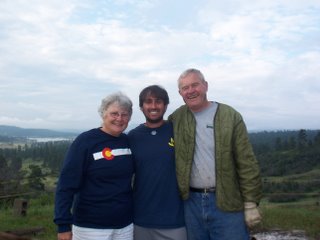
Here are a few pictures (with my new camera!) that I took this last week in Colorado. The trip was great and along with the end of the trip comes the end of my 'summer' job at Memorial Drive United Methodist Church.
I may or may not post again before I leave for my road trip to Canada (which has been named 'Canada or Bust, eh?' because my good friend Dany is getting married tomorrow night and I have a lot of packing to do. Regent College, here I come!




I may or may not post again before I leave for my road trip to Canada (which has been named 'Canada or Bust, eh?' because my good friend Dany is getting married tomorrow night and I have a lot of packing to do. Regent College, here I come!



Sunday, July 23, 2006
Lack of Blogging
It has been a while since my last blog. Over a month, actually. Its funny because sometimes I actually believe people read this and are wondering what I'm doing. Then I realize that most people who would ever read this probably know me and don't really care what I'm doing instead of blogging. Unless you're my mom. Hi Mom. :)
Let's see...what has been going on?
Well, the summer is slowly coming to a close. I'm going to recap what exactly I have been doing, using the trips I've taken as my main bullet points.
1. Galveston Staff Trip. Galveston, Texas. This was sort of a staff orientation trip. My official title is 'Senior Staff' but I feel my role is much different. Jennifer is the female Senior Staff and she actually fulfills that role much better than me. I tend to gravitate towards big-picture issues instead of dealing with the staff from a ministry perpective. Sure, its still ministry, but not the kind that I was probably hired to do. There are some reasons that I won't go into, but I think that it has been OK. This trip I layed out the foundation for what I wanted to work with the College Staff on: Christian identity.
2. High School Workcamp. Boerne, Texas. This is THE trip of the summer. 175 high school youth (all from one church!), 15 College Staff, 15 college volunteers, 30-something parent volunteers, and about 8-9 permanent youth staff. Its a big mission trip that would be a logistical nightmare if we didn't have a Youth Pastor like Steve Cragg. The theme of the week was 'Journey'. I had a small group on this trip made up of 6 high school guys that went great. We really struggled through some issues and worked on moving them towards a comitted Christian life. Mark and I did a little 'skit' (is that the right word?) where we put on robes and played Roman cross builders. We actually constructed a cross on stage and had some dialogue about who Jesus was and his message. Great trip, as usual, and really gets my mind thinking when it comes to doing ministry because of all the issues that come up during the trip. Oh, and in the big Workcamp skit titled 'SpellQuest', a mockumentary about spelling bees, I played 'Ned Reierson' (groundhog day anyone?) the Founder and Chairman of W.U.R.D.S.--The Worldwide United Regulatory Department of Spelling. Good stuff....
3. Middle School Workcamp. Houston, Texas. This is a smaller, 'cliffs notes' version of high school workcamp. About 80 middle school kids, less volunteers, same staff. My last post came on the last night of this trip. Many questions still remain.
4. Rafting Trip. San Marcos, Texas. This trip is a non-mission trip that is pretty much just a fun trip. Not much Jesus talk, just community.
5. Colorado 2K6. Pagosa Springs, Colorado. This is the best trip. This trip involves only the graduated seniors and college types. I have been working on a reading packet for this trip that I hope gets some of these kids some resources for thinking about the Christian life before they go off to college. Its a critical time for some because they need a bit of a reminder of what life is all about before they let the colleges they attend tell them another story. We leave this Tuesday.
So that's what I've been doing. I've been trying to read some Hauerwas, Berry, Brueggemann and Wright before I go off to school.
Oh yeah, I'm going to school soon. Regent College in Vancouver. I'm so ready. I leave August 6th for an 8-day road trip on the west coast. Once I get to Vancouver I need to find a place to live. Once that is done and as long as it doesn't take too long, hopefully I'll be making a trek to Alaska. That's an extra bonus, so we'll see.
So many questions this summer. Am I fit to be a 'minister'? If not, what do I need to develop about myself? What do I need to allow God to really have his way with? What are my strengths? Weaknesses? What is the point of youth ministry? How do you do any ministry involving both evangelism and discipleship well? How much do you compromise in order to be 'relevant'? How do you train leaders well? If I end up not being a pastor, what other things am I fit to do? There are so many more, including some more theological questions and less introspective.
That's all. Maybe you stopped reading a while ago.
I'm going to bed now. Goodnight.
Let's see...what has been going on?
Well, the summer is slowly coming to a close. I'm going to recap what exactly I have been doing, using the trips I've taken as my main bullet points.
1. Galveston Staff Trip. Galveston, Texas. This was sort of a staff orientation trip. My official title is 'Senior Staff' but I feel my role is much different. Jennifer is the female Senior Staff and she actually fulfills that role much better than me. I tend to gravitate towards big-picture issues instead of dealing with the staff from a ministry perpective. Sure, its still ministry, but not the kind that I was probably hired to do. There are some reasons that I won't go into, but I think that it has been OK. This trip I layed out the foundation for what I wanted to work with the College Staff on: Christian identity.
2. High School Workcamp. Boerne, Texas. This is THE trip of the summer. 175 high school youth (all from one church!), 15 College Staff, 15 college volunteers, 30-something parent volunteers, and about 8-9 permanent youth staff. Its a big mission trip that would be a logistical nightmare if we didn't have a Youth Pastor like Steve Cragg. The theme of the week was 'Journey'. I had a small group on this trip made up of 6 high school guys that went great. We really struggled through some issues and worked on moving them towards a comitted Christian life. Mark and I did a little 'skit' (is that the right word?) where we put on robes and played Roman cross builders. We actually constructed a cross on stage and had some dialogue about who Jesus was and his message. Great trip, as usual, and really gets my mind thinking when it comes to doing ministry because of all the issues that come up during the trip. Oh, and in the big Workcamp skit titled 'SpellQuest', a mockumentary about spelling bees, I played 'Ned Reierson' (groundhog day anyone?) the Founder and Chairman of W.U.R.D.S.--The Worldwide United Regulatory Department of Spelling. Good stuff....
3. Middle School Workcamp. Houston, Texas. This is a smaller, 'cliffs notes' version of high school workcamp. About 80 middle school kids, less volunteers, same staff. My last post came on the last night of this trip. Many questions still remain.
4. Rafting Trip. San Marcos, Texas. This trip is a non-mission trip that is pretty much just a fun trip. Not much Jesus talk, just community.
5. Colorado 2K6. Pagosa Springs, Colorado. This is the best trip. This trip involves only the graduated seniors and college types. I have been working on a reading packet for this trip that I hope gets some of these kids some resources for thinking about the Christian life before they go off to college. Its a critical time for some because they need a bit of a reminder of what life is all about before they let the colleges they attend tell them another story. We leave this Tuesday.
So that's what I've been doing. I've been trying to read some Hauerwas, Berry, Brueggemann and Wright before I go off to school.
Oh yeah, I'm going to school soon. Regent College in Vancouver. I'm so ready. I leave August 6th for an 8-day road trip on the west coast. Once I get to Vancouver I need to find a place to live. Once that is done and as long as it doesn't take too long, hopefully I'll be making a trek to Alaska. That's an extra bonus, so we'll see.
So many questions this summer. Am I fit to be a 'minister'? If not, what do I need to develop about myself? What do I need to allow God to really have his way with? What are my strengths? Weaknesses? What is the point of youth ministry? How do you do any ministry involving both evangelism and discipleship well? How much do you compromise in order to be 'relevant'? How do you train leaders well? If I end up not being a pastor, what other things am I fit to do? There are so many more, including some more theological questions and less introspective.
That's all. Maybe you stopped reading a while ago.
I'm going to bed now. Goodnight.
Tuesday, June 20, 2006
'Meaningful' Youth Ministry
How do you do 'meaningful' youth ministry?
After a long day of work in the Houston humidity and heat the nearly 100 middle school youth gather together back at the church. As I sat in the back of the room tonight I thought on this as I watched minute after minute of programmed time go by. First it was the video, then the skit, then more video, then a slide-show, then small group time. Coffee break for me. Now we're back together...testimonies (if you can even call them that), then a short talk--which tonight was actually just the reading of a devotional book (i'm pretty confused about that one)--then communion time. Now the kids are dancing and will be for a little while longer. They will sleep a bit tonight and then get on a bus and head for Dallas to spend the day at Six Flags Over Texas.
So is this youth ministry? I don't know what these kids leave with. I'm sure a lot of them leave with that warm, fuzzy feeling that we call 'God'. Granted, this is a Methodist church and who knows what anyone believes here anyway, but I still get this pessimistic feeling about the whole thing.
I have the day off tomorrow so maybe I'll try to write some more about this. I have to go play babysitter for a few more hours...
peace
After a long day of work in the Houston humidity and heat the nearly 100 middle school youth gather together back at the church. As I sat in the back of the room tonight I thought on this as I watched minute after minute of programmed time go by. First it was the video, then the skit, then more video, then a slide-show, then small group time. Coffee break for me. Now we're back together...testimonies (if you can even call them that), then a short talk--which tonight was actually just the reading of a devotional book (i'm pretty confused about that one)--then communion time. Now the kids are dancing and will be for a little while longer. They will sleep a bit tonight and then get on a bus and head for Dallas to spend the day at Six Flags Over Texas.
So is this youth ministry? I don't know what these kids leave with. I'm sure a lot of them leave with that warm, fuzzy feeling that we call 'God'. Granted, this is a Methodist church and who knows what anyone believes here anyway, but I still get this pessimistic feeling about the whole thing.
I have the day off tomorrow so maybe I'll try to write some more about this. I have to go play babysitter for a few more hours...
peace
Tuesday, June 13, 2006
I'm back...but tired
I'm back from the mission trip. Good trip. 170 High School students. lots of fun...
I'm too tired to think or write, but hopefully i will soon.
This is all I have now, the last paragraph of Simply Christian, by NT Wright:
Made for Spirituality, we wallow in introspection. Made for joy, we settle for pleasure. Made for justice, we clamor for vengeance. Made for relationship, we insist on our own way. Made for beauty, we are satisfied with sentiment. But new creation has already begun. The sun has begun to rise. Christians are called to leave behind, in the tomb of Jesus Christ, all that belongs to the brokenness and incompleteness of the present world. It is time, in the power of the Spirit, to take up our proper role, our fully human role, as agents, heralds, and stewards of the new day that is dawning. That, quite simply, is what it means to be Christian: to follow Jesus Christ into the new world, God's new world, which he has thrown open before us.
I'm too tired to think or write, but hopefully i will soon.
This is all I have now, the last paragraph of Simply Christian, by NT Wright:
Made for Spirituality, we wallow in introspection. Made for joy, we settle for pleasure. Made for justice, we clamor for vengeance. Made for relationship, we insist on our own way. Made for beauty, we are satisfied with sentiment. But new creation has already begun. The sun has begun to rise. Christians are called to leave behind, in the tomb of Jesus Christ, all that belongs to the brokenness and incompleteness of the present world. It is time, in the power of the Spirit, to take up our proper role, our fully human role, as agents, heralds, and stewards of the new day that is dawning. That, quite simply, is what it means to be Christian: to follow Jesus Christ into the new world, God's new world, which he has thrown open before us.
Wednesday, May 31, 2006
Another Good Reading List
Common Grounds Online 2006 Non-fiction Reading List
http://commongroundsonline.typepad.com/common_grounds_online/2006/05/summer_reading_.html#more
There is definitely some good stuff in here. Charlie Peacock, NT Wright, Wolterstorff...
Happy reading!
http://commongroundsonline.typepad.com/common_grounds_online/2006/05/summer_reading_.html#more
There is definitely some good stuff in here. Charlie Peacock, NT Wright, Wolterstorff...
Happy reading!
Tuesday, May 30, 2006
Resist
Whoever can reconcile this, 'Resist not evil', with 'Resist violence by force', again, 'Give also thy other cheek', with 'Strike again'; also, 'Love thine enemies', with 'Spoil them, make a prey of them, pursue them with fire and the sword', or, 'Pray for those that persecute you, and those that calumniate you', with 'Persecute them by fines, imprisonments and death itself', whoever, I say, can find a means to reconcile these things may be supposed also to have found a way to reconcile God with the Devil, Christ with Antichrist, Light with Darkness, and good with evil. But if this be impossible, as indeed it is impossible, so will also the other be impossible, and men do but deceive both themselves and others, while they boldly adventure to establish such absurd and impossible things.
Robert Barclay, 1678
Ever since I spent time at L'Abri I have been thinking about what it means to be a pacifist. I have always said that I was a pacifist only because I never liked fighting. Maybe its because I'm not very strong so I would just say that I was a pacifist so I would have a reason to not back up my friends in a bar fight. Luckily I have well behaving friends and I never had to show my stripes in that situation.
One might think there would be a lot of pacifists at L'Abri. Surprisingly, there were only a few. I was one of the only people who really spoke up about it. Maybe I should define this better than I am. Pacifism is a tricky word because it denotes (at least to me) an extremely passive, almost non-caring attitude towards violence. I would say that Christian pacifism is more of an active non-violence. I didn't make that up, I think I stole it from Ron Sider's old book Christ & Violence. This is the same book that introduced me to the idea of systematic injustice. It was also the only book in the L'Abri library about nonviolence (in a positive light).
I guess I have always been a Christian pacifist for two reasons (more now, but from the beginning just two.) First, I could never reconcile violence (especially war) with Jesus' words to love our enemies and 'do not resist evil'. This was never well thought out but more of a gut-feeling about how we need to take those things seriously even if it messes up what we want to think about our enemies or violence done to us. Second, I never liked the idea that nonviolence needed to be defended. Violence was always the initial reaction and then we should present a case for nonviolence. It seemed that nonviolence should be the standard and one should try to be convinced of why violence should be allowed. More gut than anything else, but I could never get around those two things.
The other thing about nonviolence and pacifism is that I think it should be carried to its logical conclusion. Just like the idea of 'pro-life' should enlarged to include not only human birth but the environment, marriage, the death penalty, and all forms of life-giving and life-taking, I think that nonviolence should be extended too. Nonviolence in its fullest form should include nonviolence to the earth and its resources, nonviolence to enemies, nonviolence to our bodies, nonviolent words and actions towards our family, nonviolent speech in general. Its kind of like the difference between peace-loving and peace-making. Not just people who want peace, but people who make peace.
I wrote most of that last night. I don't know where I was going...so I'll stop there.
Robert Barclay, 1678
Ever since I spent time at L'Abri I have been thinking about what it means to be a pacifist. I have always said that I was a pacifist only because I never liked fighting. Maybe its because I'm not very strong so I would just say that I was a pacifist so I would have a reason to not back up my friends in a bar fight. Luckily I have well behaving friends and I never had to show my stripes in that situation.
One might think there would be a lot of pacifists at L'Abri. Surprisingly, there were only a few. I was one of the only people who really spoke up about it. Maybe I should define this better than I am. Pacifism is a tricky word because it denotes (at least to me) an extremely passive, almost non-caring attitude towards violence. I would say that Christian pacifism is more of an active non-violence. I didn't make that up, I think I stole it from Ron Sider's old book Christ & Violence. This is the same book that introduced me to the idea of systematic injustice. It was also the only book in the L'Abri library about nonviolence (in a positive light).
I guess I have always been a Christian pacifist for two reasons (more now, but from the beginning just two.) First, I could never reconcile violence (especially war) with Jesus' words to love our enemies and 'do not resist evil'. This was never well thought out but more of a gut-feeling about how we need to take those things seriously even if it messes up what we want to think about our enemies or violence done to us. Second, I never liked the idea that nonviolence needed to be defended. Violence was always the initial reaction and then we should present a case for nonviolence. It seemed that nonviolence should be the standard and one should try to be convinced of why violence should be allowed. More gut than anything else, but I could never get around those two things.
The other thing about nonviolence and pacifism is that I think it should be carried to its logical conclusion. Just like the idea of 'pro-life' should enlarged to include not only human birth but the environment, marriage, the death penalty, and all forms of life-giving and life-taking, I think that nonviolence should be extended too. Nonviolence in its fullest form should include nonviolence to the earth and its resources, nonviolence to enemies, nonviolence to our bodies, nonviolent words and actions towards our family, nonviolent speech in general. Its kind of like the difference between peace-loving and peace-making. Not just people who want peace, but people who make peace.
I wrote most of that last night. I don't know where I was going...so I'll stop there.
Sunday, May 28, 2006
What Remains
I haven't had any good thoughts lately. I've been busy with my new job. It's actually nice to not have to sit in one place all day and just think about stuff. I'm much happier.
This will be another plug for a blog I read. This one should be a keeper. I was reading Matthew's stuff a few years ago (during the same time as Real Live Preacher stuff) and reading his thoughts on his own struggle to go to seminary vs. keeping a comfortable job helped me immensly. He stopped blogging for a while but he is back and I would love it if you guys went over and checked him out regularly. He writes and thinks beautifully about the stuff that matters.
What Remains
Someday, your children’s children’s children will drive by what remains of a Barnes and Noble hulking next door to the blasted remains of a Bed, Bath and Beyond. Across the potholed highway will be their fallen mirror images: the debris of a Borders; a leaning and derelict Linens ‘n’ Things.
Enjoy! Maybe one of these days I'll actually write something.
This will be another plug for a blog I read. This one should be a keeper. I was reading Matthew's stuff a few years ago (during the same time as Real Live Preacher stuff) and reading his thoughts on his own struggle to go to seminary vs. keeping a comfortable job helped me immensly. He stopped blogging for a while but he is back and I would love it if you guys went over and checked him out regularly. He writes and thinks beautifully about the stuff that matters.
What Remains
Someday, your children’s children’s children will drive by what remains of a Barnes and Noble hulking next door to the blasted remains of a Bed, Bath and Beyond. Across the potholed highway will be their fallen mirror images: the debris of a Borders; a leaning and derelict Linens ‘n’ Things.
No one gives any thought to how these things will look a thousand years from now, or even fifty. When Arnolfo di Cambia designed the duomo in Florence–over seven hundred years ago–he knew he was building something that would last. We don’t build things to last, or even to remain for very long. Everything will be abandoned, rebranded, moved along, or quietly disappeared....Read more here
Enjoy! Maybe one of these days I'll actually write something.
Friday, May 26, 2006
Language and the Limits of Imagination
My friend Sarah goes to Duke Divinity School. She is cool. Like, really cool. And really smart. And awesome. Like, really awesome.
Anyway, she blogs over at Xanga (what does that even mean?) and writes some really cool stuff. Today's post is great. She and I have similar interests in theology (not to mention music, too!) but she writes beautifully. This post is about what it is like to learn theology. I highly recommend it.
Langauge and the Limits of Imagination
so I had a thought today while walking away from my car, which I left in the parking lot with strict instructions to get steaming hot while I was in Hebrew class> I was thinking about how to describe the task of teaching/learning theology. It's about learning a language, eh? Picking up a new vocabulary, getting a feel for its own web of connections and realities, looking along its sightlines until you can move around inside the space it carves out with both freedom and faithfulness....read more here
Sarah's Blog
Enjoy!
Anyway, she blogs over at Xanga (what does that even mean?) and writes some really cool stuff. Today's post is great. She and I have similar interests in theology (not to mention music, too!) but she writes beautifully. This post is about what it is like to learn theology. I highly recommend it.
Langauge and the Limits of Imagination
so I had a thought today while walking away from my car, which I left in the parking lot with strict instructions to get steaming hot while I was in Hebrew class> I was thinking about how to describe the task of teaching/learning theology. It's about learning a language, eh? Picking up a new vocabulary, getting a feel for its own web of connections and realities, looking along its sightlines until you can move around inside the space it carves out with both freedom and faithfulness....read more here
Sarah's Blog
Enjoy!
Wednesday, May 24, 2006
Your Guide Toward Meaningful Work
This was in today's Sojomail.
Your guide toward meaningful work
by David Batstone 
Individuals yearn to pour their talents and deepest interests into work that matters. They are tired of being one person at work, another with their family, and possibly yet another in their community or political activity. Sustaining these multiple personalities quickly becomes exhausting and makes us feel spiritually fragmented.
Of course, many people in the world do not have the privilege of choosing work that means something beyond a daily wage. But for the majority of SojoMail readers, that is not the case. Education and economic conditions offer choices.
It's exciting to watch traditional boundaries on work blur. In many cases, the decision whether to join, or launch, a nonprofit organization rather than a for-profit enterprise comes down to personal strategy and circumstance. In other words, your skills alone do not determine your career path. In that respect, I know some very talented managers and business minds who find their niche confronting the problem of malaria in sub-Saharan Africa or designing low-cost housing in the Tenderloin District of San Francisco. In like manner, I met some remarkably creative and values-led people at Dell Computer Corporation where I spent last week delivering workshops on ethics and sustainability in a global economy.
Following the publication of my last book, Saving the Corporate Soul, I went on the road for two years visiting all kinds of organizations about significance and purpose at work. I discovered that when individuals explain what motivates them they keep coming back to three basic drivers: purpose, passion, and profit. So I designed a short inventory to identify how individuals take a primary orientation from one of these drivers. I call the tool the Triple P Quiz: Purpose, Passion and Profit- and it's available online.
I like to use the word orientation because we truly operate with a mix of motivations. Nonetheless, I discovered that nearly everyone I interview points to a primary driver that shapes their experience at work.
In designing the tool, I aim not only to help workers learn more about themselves, I want to offer the workplace a language for job engagement and the range of motivations that inspire team members.
It may be helpful to offer here a thumb-nail sketch of each p. Passion-led individuals value inspiring and creative work. No matter how much an organization touts the higher purpose of a job, if they do not feel passionate about the activities the position involves, they are not likely to find the job enticing. In other words, passion-led people shiver at the thought of waking up to a month of Mondays and face a set of tasks that are uninspiring.
I meet purpose-led people most often in the nonprofit and civic sector. Don't get me wrong, these individuals are not disappointed to take on creative tasks. But what inspires them is the larger mission of the enterprise of which they are a part. Purpose people do not fit into a one-size-fits-all box, however. While one person may want to find a cure for cancer, another purpose person finds motivation for designing a new software. You want purpose people to help drive the mission and core values of your organization. They keep the enterprise on course.
Profit-led people are the most rare in the non-profit world. Profit does not solely refer to bottom-line financials. More broadly, profit-led people find meaning in achieving a set of determined deliverables. They are the ones who provide discipline and structure to the organization. If you have ever started your own enterprise, you know the valuable role that profit-led people play, especially once your operation began to scale.
The deeper I engage with organizations, the more I appreciate the range of motivations required to make an organization healthy and successful. Individuals are not all wired the same; they find meaning in very different ways. Unfortunately, we do not always value the differences.
Last week I received a cynical note from an individual who took the Triple P Quiz and proclaimed that passion people are self-indulgent. In short, here's his message: It is well and good to seek inspiration, but get over it, because the world is full of suffering people. This purpose-led individual doubts the sincerity of other people who do not share his own motivation. In my experience, it is always a temptation for purpose-led people to feel that any other motivation for meaning is inferior, if not selling out.
His position reminds me of a dilemma that a CEO presented to me recently. The company was a victim of its own success; it was experiencing wild economic growth. When the company launched over a decade ago, the very passionate founder attracted a first wave of employees who also believed fervently in the products of the company. Once the company passed the $100 million mark in sales, the management team saw the need to bring in profit-led people who could better discipline its operations. The early-generation workers, of course, viewed the intrusion of the profit-led people as a threat to their passion-led corporate culture. The profit-led people felt less than welcomed. For their part, they wondered how such a chaotic, undisciplined crew could have gotten so far in business.
My challenge is to help every member of an organization recognize the value of an orchestra with many instruments. No organization can sustain itself without a strong mission (purpose), a creative and inspired dynamism (passion), and clear set of achievements and deliverables (profit). When any one of these values dominates in such a degree that it squeezes out the comfortable space the others offer, the organization will falter. Those enterprises that value the uniqueness of their personnel, on the other hand, design work environments where productivity thrives.
-------------------
So, are you Passion-driven, Profit-driven, Purpose-driven? Take the test here.
I took the test and I am 81% Passion, 69% Purpose, 50% profit.*

*My first test was taken in a busy room without much thought. I retook the test about 12 hours later and my new results were: 94% Passion, 63% Purpose, and 44% Profit.
Subscribe to:
Posts (Atom)


