Do you know Pascal's Wager?
Either God exists, or God doesn't exist. Either you choose to believe in God, or choose not to believe in God. Those are the 4 pieces of the wager. You could make a square that looked like this:
...........GOD EXISTS....................GOD DOES NOT EXIST.............
-
-
Belief
------------------------------------------------------------------------------------
-
-
Non-Belief
-------------------------------------------------------------------------------------
(it's harder to make a square on Blogger than I thought)
Now, within this matrix there are 4 options:
1)Belief / God exists
2)Belief / God does not exist
3)non-belief / God exists
4)non-belief / God does not exist
Here is a brief description of each one:
1) You choose to believe in God and he does in fact exist. Pascal would say that the reward is 'heaven' but also, tangible benefits here and now.
2) You choose to beileve in God but he doesn't actually exist. Pascal would say nothing is lost. If there is no God, there is no afterlife, and your belief in God is a null set.
3) You choose not to believe in God and He does exist. Pascal would say that your 'punishment' would be 'hell' for non-belief.
4) You choose not to believe in God and He does not exist. Again, null set. Makes no difference.
The point of the wager is that your 'best bet' is to believe in God.
.....................GOD EXISTS....................GOD DOES NOT EXIST.............
-
-
Belief.........You Win - Heaven..........Null Set....makes no difference
------------------------------------------------------------------------------------
-
-
Non-Belief...You lose - Hell.................null set...Makes no difference
-------------------------------------------------------------------------------------
OK, that is our brief philosophy lesson for today. I'm not going to get into the whole heaven and hell issue right now.
Now take Pascal's Wager and change it from belief in God, to belief that you can live an extraordinary life. Or perhaps that you can live a simple life, or a godly life, or a subversive life, or a life like Martin Luther King, Jr., or Mother Teresa, or Stephan Bauman, or Steve Garber.
Here are the results (Fill in Steve Garber with your own personal choice):
1) You believe that you can live a life like Steve Garber and in fact, you can't. Embarrassment might come, perhaps a feeling of failure, but you wil be dead so it doesn't particularly matter to you.
2) You believe that you can't live a life like Steve Garber and in you are right. Nothing happens, you continue your job in your cubicle, you have a nice house in the suburbs, and die very comfortable and bored.
3) You believe that you can't live a life like Steve Garber and you are wrong. You missed your chance and see other people following their passions and fulfilling their calling in God's Kingdom. You experience sadness and regret, knowing that you never had the guts to do anything risky.
4) You believe that you can live a life like Steve Garber, and you're right! You live a life of purpose, fueled by your God-given gifts and passions and not only you, but countless numbers of others are better for it.
So, your best bet is to believe that it is possible to live an extraordinary life. (And of course I mean extraordinary in terms of God's kingdom, where there is neither Jew nor Greek, slave nor free, male nor female, for you are all one in Christ Jesus.)
Thursday, April 20, 2006


Wednesday, April 19, 2006
Why Love is Not the Answer
The following is from a talk that Stanley Hauerwas gave to the Duke Youth Academy in 2005. Having worked in youth ministry for a pretty long time I think it is important to see what Hauerwas is saying here. There is so much more to Jesus than we are teaching our youth about. The talk in its entirety can be found here:
http://www.valpo.edu/cresset/2006_Lent_Hauerwas.pdf
Why Love is Not the Answer
One of the difficulties for anyone trying to figure out what it might mean to be a Christian in America is that our very familiarity with Christianity has made it difficult to hear what is read to us Sunday after Sunday from the Bible. For example, many of you, when you are talking with friends about life, might say that what makes you a Christian is a “personal relationship with Jesus.” Such a relation, you might suggest, is about trying to be a loving person. You might even suggest that Christians are to love one another because our sins have been forgiven.
There is no question that love between the persons of the Trinity is at the very heart of the Christian faith. But I think nothing is more destructive to the Christian faith than the current identification of Christianity with love. If God wants us to be more loving, why do you need Jesus to tell us that? If Christianity is about the forgiveness of our sins, then why did Jesus have to die? If God is all about love, why go through the trouble of being this man, Jesus? Why didn’t God simply tell us through an appropriate spokesman (it could have been Jesus) that God wants us to love one another? God, in such a faith, becomes that great OK who tells us we are OK and, therefore, we are taught we should tell one another we are OK. But if Jesus is the proclamation of the great “OK” why would anyone have bothered putting him to death? There must have been some terrible failure in communication.
One of the problems with identifying Christianity with love is how such a view turns out to be anti-Semitic and anti-Catholic. The Jews and Catholics become identified with law and dogma, in contrast to Protestant Christians who are about love. Such a view assumes that any form of faith that creates divisions must be retrograde because such a faith is not about loving. Of course, when love becomes what Christianity is all about, we can make no sense of Jesus’ death and resurrection.
For example, consider how the temptation narrative of Jesus in the fourth chapter of Luke must be read if Jesus is all about love. It is as if we think Jesus went out to find himself. We are told that he “was driven out” by the devil no less, but we know such language is “mythical.” Such language was used to help us understand the spiritual struggle Jesus must have been going through, that is, he was confronting the existential nothingness of existence which was necessary for his ability to make an authentic choice about how he would live his life.
Returning from this desert, the disciples note that he looks as if he has been through a very rough time. “Man, you look like you have been to hell and back,” they might say. (No doubt they must have said something like this, for otherwise how do we explain the language of being tempted by the devil.) In response, Jesus can be imagined to say, “You are right, I have had a rough forty days, but I have come to recognize what God wants from us. So I feel compelled to lay this big insight on you. I have come to realize that God, or whatever we call that which we cannot explain, wants us to love one another. There, I have said it, and I am glad I did.”
Ask yourself: If that is what Jesus is all about—getting us to love one another—why did everyone reject him? They did so, I think, because when Jesus was told by the devil he would be given the power to turn stones to bread, he refused; when Jesus was offered authority over all the kingdoms of this world, he refused; when he was offered the possibility he would not die, he refused. Note that Jesus was offered the means to feed the hungry, the authority to end war between peoples, and even the defeat of death itself. But he refused these goods. He did so because Jesus knows God’s kingdom cannot be forced into existence with the devil’s means.
But note that Jesus’ refusal to play the devil’s game does not mean the kingdom he proclaims is not political. Jesus’work is political, but the kingdom politics he represents is one that comes through the transformation of the world’s understanding of how to achieve good results. Jesus refuses to use the
violence of the world to achieve “peace.” But that does not mean he is any less political or that he is not about the securing of peace. It is, therefore, not accidental that after the temptation narrative we see Jesus in a synagogue on the Sabbath reading from the scroll of Isaiah. The passage he reads says,
The Spirit of the Lord is upon me, because he has anointed me to bring good news to the poor. He has sent me to proclaim release to the captives
and recovery of sight to the blind,
to let the oppressed go free,
to proclaim the year of the Lord’s favor (Luke 4:18–19).
After reading this Jesus sat down and said, “Today this scripture has been fulfilled in your hearing.”
The offense is not that Jesus wanted his followers to be loving; the offense is Jesus. Jesus is the politics of the new age. He is about the establishment of a kingdom. He is the one who has created a new time that gives us time not only to care for the poor but to be poor. Jesus is the one who makes it possible to be nonviolent in a violent world. We should not be surprised that Jesus is the embodiment of such politics. After all, Mary’s song promised that the proud would have their imaginations “scattered,” the powerful would be brought down from their thrones, the rich would be sent away empty, the lowly would be lifted up, and the hungry would be filled with good things. Is it any wonder that the world was not prepared to welcome this savior?
http://www.valpo.edu/cresset/2006_Lent_Hauerwas.pdf
Why Love is Not the Answer
One of the difficulties for anyone trying to figure out what it might mean to be a Christian in America is that our very familiarity with Christianity has made it difficult to hear what is read to us Sunday after Sunday from the Bible. For example, many of you, when you are talking with friends about life, might say that what makes you a Christian is a “personal relationship with Jesus.” Such a relation, you might suggest, is about trying to be a loving person. You might even suggest that Christians are to love one another because our sins have been forgiven.
There is no question that love between the persons of the Trinity is at the very heart of the Christian faith. But I think nothing is more destructive to the Christian faith than the current identification of Christianity with love. If God wants us to be more loving, why do you need Jesus to tell us that? If Christianity is about the forgiveness of our sins, then why did Jesus have to die? If God is all about love, why go through the trouble of being this man, Jesus? Why didn’t God simply tell us through an appropriate spokesman (it could have been Jesus) that God wants us to love one another? God, in such a faith, becomes that great OK who tells us we are OK and, therefore, we are taught we should tell one another we are OK. But if Jesus is the proclamation of the great “OK” why would anyone have bothered putting him to death? There must have been some terrible failure in communication.
One of the problems with identifying Christianity with love is how such a view turns out to be anti-Semitic and anti-Catholic. The Jews and Catholics become identified with law and dogma, in contrast to Protestant Christians who are about love. Such a view assumes that any form of faith that creates divisions must be retrograde because such a faith is not about loving. Of course, when love becomes what Christianity is all about, we can make no sense of Jesus’ death and resurrection.
For example, consider how the temptation narrative of Jesus in the fourth chapter of Luke must be read if Jesus is all about love. It is as if we think Jesus went out to find himself. We are told that he “was driven out” by the devil no less, but we know such language is “mythical.” Such language was used to help us understand the spiritual struggle Jesus must have been going through, that is, he was confronting the existential nothingness of existence which was necessary for his ability to make an authentic choice about how he would live his life.
Returning from this desert, the disciples note that he looks as if he has been through a very rough time. “Man, you look like you have been to hell and back,” they might say. (No doubt they must have said something like this, for otherwise how do we explain the language of being tempted by the devil.) In response, Jesus can be imagined to say, “You are right, I have had a rough forty days, but I have come to recognize what God wants from us. So I feel compelled to lay this big insight on you. I have come to realize that God, or whatever we call that which we cannot explain, wants us to love one another. There, I have said it, and I am glad I did.”
Ask yourself: If that is what Jesus is all about—getting us to love one another—why did everyone reject him? They did so, I think, because when Jesus was told by the devil he would be given the power to turn stones to bread, he refused; when Jesus was offered authority over all the kingdoms of this world, he refused; when he was offered the possibility he would not die, he refused. Note that Jesus was offered the means to feed the hungry, the authority to end war between peoples, and even the defeat of death itself. But he refused these goods. He did so because Jesus knows God’s kingdom cannot be forced into existence with the devil’s means.
But note that Jesus’ refusal to play the devil’s game does not mean the kingdom he proclaims is not political. Jesus’work is political, but the kingdom politics he represents is one that comes through the transformation of the world’s understanding of how to achieve good results. Jesus refuses to use the
violence of the world to achieve “peace.” But that does not mean he is any less political or that he is not about the securing of peace. It is, therefore, not accidental that after the temptation narrative we see Jesus in a synagogue on the Sabbath reading from the scroll of Isaiah. The passage he reads says,
The Spirit of the Lord is upon me, because he has anointed me to bring good news to the poor. He has sent me to proclaim release to the captives
and recovery of sight to the blind,
to let the oppressed go free,
to proclaim the year of the Lord’s favor (Luke 4:18–19).
After reading this Jesus sat down and said, “Today this scripture has been fulfilled in your hearing.”
The offense is not that Jesus wanted his followers to be loving; the offense is Jesus. Jesus is the politics of the new age. He is about the establishment of a kingdom. He is the one who has created a new time that gives us time not only to care for the poor but to be poor. Jesus is the one who makes it possible to be nonviolent in a violent world. We should not be surprised that Jesus is the embodiment of such politics. After all, Mary’s song promised that the proud would have their imaginations “scattered,” the powerful would be brought down from their thrones, the rich would be sent away empty, the lowly would be lifted up, and the hungry would be filled with good things. Is it any wonder that the world was not prepared to welcome this savior?
Monday, April 17, 2006
Regent or Northpark?
I went to Chicago this weekend to look at Northpark Seminary. I liked it. Chicago is great.
I went to Vancouver last July to look at Regent College. I liked it. Vancouver is great.
Northpark is a pretty unique school.
Regent is a pretty unique school.
I think I would be challenged and encouraged to think in new ways at Northpark.
I think I would be challenged and encouraged to think in new ways at Regent.
Northpark
-Has justice issues at the core of the program.
-Centered in and focused on the city
-Because of the denomination it is affiliated with (Covenant) it is an interesting place for theological discussion
-Professors are extremely accessible
-Good and growing reputation in the academic community
-May not be a great place to prepare for Ph.D. programs, although certainly possible
Regent
-Has interdisciplinary studies/engaging culture at the core of the program
-Located on the campus of a major, secular university
-Because it is transdenominational it is an interesting place for theological discussion
-Professors are highly respected
-Good reputation in the academic community
-Probably a good place to prepare for Ph.D. programs
I think that Regent and Northpark stand out among all the Seminary/Graduate schools I have looked at. Most schools that I have looked at are looking to churning out pastors and not looking at the important issues (That’s probably not completely true but it is what I perceive). Northpark and Regent are different in that they want to prepare Pastors (or non-pastors) who think critically about issues that are emerging in our society.
From Regent’s website: Regent College is an international graduate school of Christian studies that educates, nurtures, and equips women and men to live, work and minister in their varied vocations, in ways honouring to God.
Regent isn’t concerned with producing professional ministers. If that is your vocation/calling, then they are concerned with equipping you to live out that vocation fully, but it seems to me that it is more of a secondary issue to them. That is unique. (Plus, they used the English spelling of ‘honouring’ with the extra ‘u’. That is always cool and reminds me of L’Abri.)
From Northpark’s website: We hope to be a bridge between the seminary, the church and the public arena. Challenging all to "Bridge the Gap" of injustice by their choices, their thinking, their work, and their life of Faith in Christ.
No other evangelical seminary address issues of social justice and seeks to integrate it to the life of the church like Northpark.
I do have an idea of which one is the right fit for me but it is a hard choice to make. Thankfully, I feel that I have some freedom from God in the choice. I tend to think very black-and-white about these things but I am learning that it is hardly ever that simple. In this case, both are good choices and I am not sure I can make a ‘wrong’ decision. The hope I have is that no matter what decision I end up making, for better or for worse, God has been guiding me all along whether I am aware of it or not.
Os Guinness once told me, “KC, be an entrepreneur with your life.” There is both freedom and responsibility in our choices. I have the freedom to do anything in the world, but I have the responsibility to use my gifts wisely and with the Kingdom on my mind. I suspect this choice is no different.
I guess we’ll see…
I went to Vancouver last July to look at Regent College. I liked it. Vancouver is great.
Northpark is a pretty unique school.
Regent is a pretty unique school.
I think I would be challenged and encouraged to think in new ways at Northpark.
I think I would be challenged and encouraged to think in new ways at Regent.
Northpark
-Has justice issues at the core of the program.
-Centered in and focused on the city
-Because of the denomination it is affiliated with (Covenant) it is an interesting place for theological discussion
-Professors are extremely accessible
-Good and growing reputation in the academic community
-May not be a great place to prepare for Ph.D. programs, although certainly possible
Regent
-Has interdisciplinary studies/engaging culture at the core of the program
-Located on the campus of a major, secular university
-Because it is transdenominational it is an interesting place for theological discussion
-Professors are highly respected
-Good reputation in the academic community
-Probably a good place to prepare for Ph.D. programs
I think that Regent and Northpark stand out among all the Seminary/Graduate schools I have looked at. Most schools that I have looked at are looking to churning out pastors and not looking at the important issues (That’s probably not completely true but it is what I perceive). Northpark and Regent are different in that they want to prepare Pastors (or non-pastors) who think critically about issues that are emerging in our society.
From Regent’s website: Regent College is an international graduate school of Christian studies that educates, nurtures, and equips women and men to live, work and minister in their varied vocations, in ways honouring to God.
Regent isn’t concerned with producing professional ministers. If that is your vocation/calling, then they are concerned with equipping you to live out that vocation fully, but it seems to me that it is more of a secondary issue to them. That is unique. (Plus, they used the English spelling of ‘honouring’ with the extra ‘u’. That is always cool and reminds me of L’Abri.)
From Northpark’s website: We hope to be a bridge between the seminary, the church and the public arena. Challenging all to "Bridge the Gap" of injustice by their choices, their thinking, their work, and their life of Faith in Christ.
No other evangelical seminary address issues of social justice and seeks to integrate it to the life of the church like Northpark.
I do have an idea of which one is the right fit for me but it is a hard choice to make. Thankfully, I feel that I have some freedom from God in the choice. I tend to think very black-and-white about these things but I am learning that it is hardly ever that simple. In this case, both are good choices and I am not sure I can make a ‘wrong’ decision. The hope I have is that no matter what decision I end up making, for better or for worse, God has been guiding me all along whether I am aware of it or not.
Os Guinness once told me, “KC, be an entrepreneur with your life.” There is both freedom and responsibility in our choices. I have the freedom to do anything in the world, but I have the responsibility to use my gifts wisely and with the Kingdom on my mind. I suspect this choice is no different.
I guess we’ll see…
Saturday, April 15, 2006
Easter
"Easter is God's most radical, most extreme, most decisive answer to prayer. The resurrection of Jesus is the most determined maneuver God makes to intervene among those who seek help in their need and desperation."
--Walter Brueggemann
“[The resurrection] is the ultimate act of prophetic energizing in which a new history is initiated. It is a new history open to all but peculiarly received by the marginal victims of the old order.”
--Walter Brueggemann
"The resurrection of Jesus is the ultimate sign that our salvation comes only when we cease trying to interpret Jesus' story in the light of our history, and instead we interpret ourselves in the light of his."
--Stanley Hauerwas
--Walter Brueggemann
“[The resurrection] is the ultimate act of prophetic energizing in which a new history is initiated. It is a new history open to all but peculiarly received by the marginal victims of the old order.”
--Walter Brueggemann
"The resurrection of Jesus is the ultimate sign that our salvation comes only when we cease trying to interpret Jesus' story in the light of our history, and instead we interpret ourselves in the light of his."
--Stanley Hauerwas
But we are here today, on Sunday, the resurrection day, to celebrate and proclaim to the world the fact that Jesus Christ is risen from the dead. We live by this truth and we shall die by this truth. We comfort each other by this truth and we are stirred to love and devotion and service by this truth. Let us therefore settle it in our minds and hearts that we will allow the truth of the resurrection to propel us to be true revolutionaries. Not the cheap and easy kind of revolutionary, those who want to use violence to overthrow the present order and simply turn it upside down and replace it with one of their own. No, we’ve had plenty of those and it doesn’t work. No, we are like Jesus and, in his love and power to be double revolutionaries, celebrating his victory over death and sin, and finding through prayer and politics and Bible study and campaigning and love and fellowship and celebration and truth — finding the way to bring that victory to birth, both in the dark corners of our own private and personal lives and in the dark corners of God’s suffering world.
May God give you grace and joy in his service and in believing and living the gospel of the resurrection and to his name be the praise and the glory. Amen.
--N.T. Wright, from a sermon given at The Falls ChurchWednesday, April 12, 2006
For the Love of God! (or mammon)
Google is smart. If you use Google to search, you will notice small ads that pop up on the right side of the screen that are based on your search. For instance, I do a search for "Astros" and on the side of the screen are these links (they may differ each time): www.mlb.com and, "Houston Baseball Tickets" www.cheappricedtickets.com . They are customized advertising links. That is how Google makes its money, advertising.
Gmail is also smart. Gmail is similarly set up so that these ads are related to keywords from the email that is being read. Gmail also has a special feature that scrolls news items across the top of your page. These are more general news items, but some are "sponsored links" that are related to key words from your emails. Since many of my emails are discussing Christian ideas with people, sending quotes and whatnot, many of the links are Christian in nature. Here is one below that made me laugh:
www.collect7keveryday.com
What's funny is that the word 'Christian' is nowhere to be found on the site except for the title, "Learn from Christian Millionaires." Maybe the "Make $7,000 dollars over and over again," is supposed to conjur up memories of the sacred number 7 from our Jewish roots. But I doubt it.
I'm going somewhere with this, I promise.
On the actual link on Gmail includes the following tagline: It's OK to be Rich...So Says The Bible. Learn To Make Millions And Spread The Wealth.
Here is a story that I got from The Drudge Report today: Oprah Winfrey: Wealth Is 'A Good Thing'. This article is ridiculous to me.
I just read an article yesterday in First Things by Alan Jacobs of Wheaton in which he quotes Kierkegaard:
“Christian scholarship is the Church’s prodigious invention to defend itself against the Bible, to ensure that we can continue to be good Christians without the Bible coming too close. . . . We would be sunk if it were not for Christian scholarship! Praise be to everyone who works to consolidate the reputation of Christian scholarship, which helps to restrain the New Testament, this confounded book which would, one, two, three, run us all down if it got loose.”
How did we get to the place where the Bible no longer speaks to us prophetically about wealth. We have somehow allowed the love of money to seep into our interpretation of scripture that allows us to read it without any consequences. I'm not saying wealth is necessarily bad, but should we assume that it is necessarily good? I think that is dangerous place to be.
Why are there Christain get-rich-quick schemes? Because there are Christians who will buy into that crap, literally. We listen to Oprah instead of Amos, I suspect.
http://www.reallivepreacher.com/node/723
Maybe it's unrelated, but The Preacher has just written a beautiful RLPDV (Real Live Preacher Dramatized Version) story of the Rich Man from Mark's Gospel. I think it is related.
Gmail is also smart. Gmail is similarly set up so that these ads are related to keywords from the email that is being read. Gmail also has a special feature that scrolls news items across the top of your page. These are more general news items, but some are "sponsored links" that are related to key words from your emails. Since many of my emails are discussing Christian ideas with people, sending quotes and whatnot, many of the links are Christian in nature. Here is one below that made me laugh:
www.collect7keveryday.com
What's funny is that the word 'Christian' is nowhere to be found on the site except for the title, "Learn from Christian Millionaires." Maybe the "Make $7,000 dollars over and over again," is supposed to conjur up memories of the sacred number 7 from our Jewish roots. But I doubt it.
I'm going somewhere with this, I promise.
On the actual link on Gmail includes the following tagline: It's OK to be Rich...So Says The Bible. Learn To Make Millions And Spread The Wealth.
Here is a story that I got from The Drudge Report today: Oprah Winfrey: Wealth Is 'A Good Thing'. This article is ridiculous to me.
I just read an article yesterday in First Things by Alan Jacobs of Wheaton in which he quotes Kierkegaard:
“Christian scholarship is the Church’s prodigious invention to defend itself against the Bible, to ensure that we can continue to be good Christians without the Bible coming too close. . . . We would be sunk if it were not for Christian scholarship! Praise be to everyone who works to consolidate the reputation of Christian scholarship, which helps to restrain the New Testament, this confounded book which would, one, two, three, run us all down if it got loose.”
How did we get to the place where the Bible no longer speaks to us prophetically about wealth. We have somehow allowed the love of money to seep into our interpretation of scripture that allows us to read it without any consequences. I'm not saying wealth is necessarily bad, but should we assume that it is necessarily good? I think that is dangerous place to be.
Why are there Christain get-rich-quick schemes? Because there are Christians who will buy into that crap, literally. We listen to Oprah instead of Amos, I suspect.
http://www.reallivepreacher.com/node/723
Maybe it's unrelated, but The Preacher has just written a beautiful RLPDV (Real Live Preacher Dramatized Version) story of the Rich Man from Mark's Gospel. I think it is related.
The Cross
"The very idea that we might know God abstracted from how God makes himself known was the result of the loss of Christian politics called church. . . .Christians betray themselves as well as their non-Christian brothers and sisters when in the interest of apologetics we say and act as if the cross of Christ is incidental to God's being. In fact, the God we worship and world God created cannot be truthfully known without the cross, which is why the knowledge of God and ecclesiology--or the politics called church--are interdependent."
-Stanley Hauerwas, With the Grain of the Universe: The Church's Witness and Natural Theology (Brazos, 2001), 16-17.
This week, we should reflect on the cross. The cross is the lens in which we can see and know God as he truly is.
The cross was once a sign of Roman power--Don't mess with Rome or you'll end up on a cross. It is now the most widely embraced Christian symbol. That is redemption. That is the power of Easter.
-Stanley Hauerwas, With the Grain of the Universe: The Church's Witness and Natural Theology (Brazos, 2001), 16-17.
This week, we should reflect on the cross. The cross is the lens in which we can see and know God as he truly is.
The cross was once a sign of Roman power--Don't mess with Rome or you'll end up on a cross. It is now the most widely embraced Christian symbol. That is redemption. That is the power of Easter.
Sunday, April 09, 2006
God is Always Calling
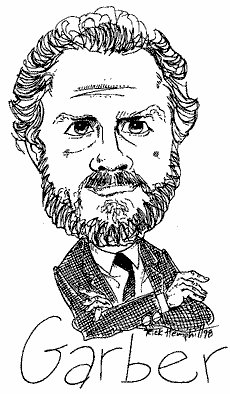
Here is a great article about calling and vocation from the Washington Institute. This has Garber written all over it. Here is a bit about the author:
Andi Ashworth is the author of Real Love for Real Life: The Art and Work of Caring . Andi partners with her husband Charlie Peacock-Ashworth in the work of the Art House, a 90-year-old, renovated country church that serves as the Ashworths’ home, as well as their place of business and ministry.
Charlie Peacock is the one of the men behind Jars of Clay, Switchfoot, and Blood:Water Mission. Steve Garber is one of the men behind Charlie Peacock.
This post is dedicated to Laura.
From the article:
One thing I know for sure as I approach my 50th year: Understanding one’s calling is an ongoing process of discovery, and calling doesn’t have to be limited to one area. I continue to find new aspects of calling announcing themselves in different chapters of our lives, and I don’t suppose the revelation is over yet.
Young people of college age feel such pressure to decide what field of study to engage in, what kind of work to pursue. The age-old question, “what will you be when you grow up?” is haunting. I remember my daughter’s anxiety as the need to declare a major loomed in her second year of college. Since my husband and I had grappled with the meaning of vocation for ourselves, we urged her to study what she loved, to move toward her true interests rather than worrying about the exact nature of her post-college life. We trusted that God would bring her to the work, people, and places that would fit the way He’d created her.
A few years after giving our daughter this advice, our pastor, Scotty Smith, gave Chuck and me similar counsel. We were living temporarily in St. Louis to attend Covenant Theological Seminary, and the Master of Divinity path my husband was on quickly showed itself to be the wrong one for him. During a break we came home and sought counsel from Scotty. He set us free from worrying about degree programs and told us to frame our choice of classes toward calling instead of degree. His advice reminded us of something important that had been lost.
That is good advice. Frame your choice of classes toward calling instead of degree. Frame all of your choices towards calling instead of the thing that the world seems to think is right. Remember, we can live within a different system.
Friday, April 07, 2006
Think, dammit!
I would like to thank Mike for this quote:
People demand freedom of speech as a compensation for the freedom of thought which they seldom use.
--Soren Kierkegaard
Freedom of thought must be one of the greatest benefits of being a Christian. I'm not about being a Christian for the benefits, in fact, I usually hate it when people say stuff like that. But when I think about it honestly it's not really a benefit, it's more of a responsibility. We are free to think and so we should! We should imagine, we should dream, we should create. We must do these things if we are to live in now-but-not-yet Kingdom of God. We must engage our entire selves (minds included!) in the work of the Kingdom and not sit back and uncritically live in the world as if we are waiting to be raptured. I'm sorry everyone, that's just not going to happen. (Side note: check out www.notraptured.com for a few laughs)
But here is my point: this whole thing is about transformation. Paul said to be transformed by the renewing of your mind. It starts there. Only then we can think of new ways of doing things. We don't have to be stuck in the system that only allows little leeway on how things are done. We can be in God's system in which all things are possible, all doors can be opened, all wounds can be healed, all debts can be cancelled, and all people can be reconciled.
People demand freedom of speech as a compensation for the freedom of thought which they seldom use.
--Soren Kierkegaard
Freedom of thought must be one of the greatest benefits of being a Christian. I'm not about being a Christian for the benefits, in fact, I usually hate it when people say stuff like that. But when I think about it honestly it's not really a benefit, it's more of a responsibility. We are free to think and so we should! We should imagine, we should dream, we should create. We must do these things if we are to live in now-but-not-yet Kingdom of God. We must engage our entire selves (minds included!) in the work of the Kingdom and not sit back and uncritically live in the world as if we are waiting to be raptured. I'm sorry everyone, that's just not going to happen. (Side note: check out www.notraptured.com for a few laughs)
But here is my point: this whole thing is about transformation. Paul said to be transformed by the renewing of your mind. It starts there. Only then we can think of new ways of doing things. We don't have to be stuck in the system that only allows little leeway on how things are done. We can be in God's system in which all things are possible, all doors can be opened, all wounds can be healed, all debts can be cancelled, and all people can be reconciled.
Monday, April 03, 2006
Full Circle

Washington, DC, April 3, 2006:
Caller: "Is he in?"
Sean: "Let me see, one moment. Can I tell him who's calling?"
Caller: "Uh, yeah... Clarence Thomas."
It was just after the Presidential election in 2000. Thousands of people were gathered in front of the Supreme Court in both protest and support of whatever it was people were supporting and protesting. And in the middle of it all was this man:

That's Sean P. Flynn, in the middle of serious left and right-wing crazies, holding the sign that says: ABOLISH THE DESIGNATED HITTER (Rule 6.10)
That was the last time they met...but everytime Sean sees the President or Clarence Thomas watches an American League game, they both stop and think about what that day meant for all of us...
What are we doing?
The LORD God took the man and put him in the Garden of Eden to work it and take care of it. -- Genesis 2:15
The vocation of every man and woman is to serve other people. -- Tolstoy
It is the first of all problems for a man to find out what kind of work he is to do in this universe. -- Thomas Carlyle
Each man has his own vocation; his talent is his call. There is one direction in which all space is open to him. -- Ralph Waldo Emerson
Vocations which we wanted to pursue, but didn't, bleed, like colors, on the whole of our existence. -- Balzac
Everyone has his own specific vocation or mission in life; everyone must carry out a concrete assignment that demands fulfillment. Therein he cannot be replaced, nor can his life be repeated, thus, everyone's task is unique as his specific opportunity to implement it. -- Victor Frankl
Well, it's certainly very appropriate for any Christian to ask, to struggle with a calling, a vocation. I do it. Every Christian does. -- Jim Wallis
It is not more vacation we need - it is more vocation. -- Eleanor Roosevelt
Vocation is the spine of life. -- Nietzsche
There is no easy formula for determining right and wrong livelihood, but it is essential to keep the question alive. To return the sense of dignity and honor to manhood, we have to stop pretending that we can make a living at something that is trivial or destructive and still have sense of legitimate self-worth. A society in which vocation and job are separated for most people gradually creates an economy that is often devoid of spirit, one that frequently fills our pocketbooks at the cost of emptying our souls. -- Sam Keen
Where the needs of the world and your talents cross, there lies your vocation. -- Aristotle
A total economy is one in which everything - "life forms," for instance, or the "right to pollute" - is "private property" and has a price and is for sale. In a total economy significant and sometimes critical choices that once belonged to individuals or communities become the property of corporations. A total economy, operating internationally, necessarily shrinks the powers of state and national governments, not only because those governments have signed over significant powers to an international bureaucracy or because political leaders become the paid hacks of the corporations but also because political processes - and especially democratic processes - are too slow to react to unrestrained economic and technological development on a global scale. And when state and national governments begin to act in effect as agents of the global economy, selling their people for low wages and their people's products for low prices, then the rights and liberties of citizenship must necessarily shrink. A total economy is an unrestrained taking of profits from the disintegration of nations, communities, households, landscapes, and ecosystems. It licenses symbolic or artificial wealth to "grow" by means of the destruction of the real wealth of all the world.
Among the many costs of the total economy, the loss of the principle of vocation is probably the most symptomatic and, from a cultural standpoint, the most critical. It is by the replacement of vocation with economic determinism that the exterior workings of a total economy destroy the character and culture also from the inside. -- Wendell Berry
The vocation of every man and woman is to serve other people. -- Tolstoy
It is the first of all problems for a man to find out what kind of work he is to do in this universe. -- Thomas Carlyle
Each man has his own vocation; his talent is his call. There is one direction in which all space is open to him. -- Ralph Waldo Emerson
Vocations which we wanted to pursue, but didn't, bleed, like colors, on the whole of our existence. -- Balzac
Everyone has his own specific vocation or mission in life; everyone must carry out a concrete assignment that demands fulfillment. Therein he cannot be replaced, nor can his life be repeated, thus, everyone's task is unique as his specific opportunity to implement it. -- Victor Frankl
Well, it's certainly very appropriate for any Christian to ask, to struggle with a calling, a vocation. I do it. Every Christian does. -- Jim Wallis
It is not more vacation we need - it is more vocation. -- Eleanor Roosevelt
Vocation is the spine of life. -- Nietzsche
There is no easy formula for determining right and wrong livelihood, but it is essential to keep the question alive. To return the sense of dignity and honor to manhood, we have to stop pretending that we can make a living at something that is trivial or destructive and still have sense of legitimate self-worth. A society in which vocation and job are separated for most people gradually creates an economy that is often devoid of spirit, one that frequently fills our pocketbooks at the cost of emptying our souls. -- Sam Keen
Where the needs of the world and your talents cross, there lies your vocation. -- Aristotle
A total economy is one in which everything - "life forms," for instance, or the "right to pollute" - is "private property" and has a price and is for sale. In a total economy significant and sometimes critical choices that once belonged to individuals or communities become the property of corporations. A total economy, operating internationally, necessarily shrinks the powers of state and national governments, not only because those governments have signed over significant powers to an international bureaucracy or because political leaders become the paid hacks of the corporations but also because political processes - and especially democratic processes - are too slow to react to unrestrained economic and technological development on a global scale. And when state and national governments begin to act in effect as agents of the global economy, selling their people for low wages and their people's products for low prices, then the rights and liberties of citizenship must necessarily shrink. A total economy is an unrestrained taking of profits from the disintegration of nations, communities, households, landscapes, and ecosystems. It licenses symbolic or artificial wealth to "grow" by means of the destruction of the real wealth of all the world.
Among the many costs of the total economy, the loss of the principle of vocation is probably the most symptomatic and, from a cultural standpoint, the most critical. It is by the replacement of vocation with economic determinism that the exterior workings of a total economy destroy the character and culture also from the inside. -- Wendell Berry
Subscribe to:
Posts (Atom)


