"The very idea that we might know God abstracted from how God makes himself known was the result of the loss of Christian politics called church. . . .Christians betray themselves as well as their non-Christian brothers and sisters when in the interest of apologetics we say and act as if the cross of Christ is incidental to God's being. In fact, the God we worship and world God created cannot be truthfully known without the cross, which is why the knowledge of God and ecclesiology--or the politics called church--are interdependent."
-Stanley Hauerwas, With the Grain of the Universe: The Church's Witness and Natural Theology (Brazos, 2001), 16-17.
This week, we should reflect on the cross. The cross is the lens in which we can see and know God as he truly is.
The cross was once a sign of Roman power--Don't mess with Rome or you'll end up on a cross. It is now the most widely embraced Christian symbol. That is redemption. That is the power of Easter.
Wednesday, April 12, 2006


Sunday, April 09, 2006
God is Always Calling
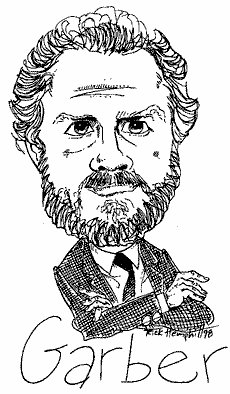
Here is a great article about calling and vocation from the Washington Institute. This has Garber written all over it. Here is a bit about the author:
Andi Ashworth is the author of Real Love for Real Life: The Art and Work of Caring . Andi partners with her husband Charlie Peacock-Ashworth in the work of the Art House, a 90-year-old, renovated country church that serves as the Ashworths’ home, as well as their place of business and ministry.
Charlie Peacock is the one of the men behind Jars of Clay, Switchfoot, and Blood:Water Mission. Steve Garber is one of the men behind Charlie Peacock.
This post is dedicated to Laura.
From the article:
One thing I know for sure as I approach my 50th year: Understanding one’s calling is an ongoing process of discovery, and calling doesn’t have to be limited to one area. I continue to find new aspects of calling announcing themselves in different chapters of our lives, and I don’t suppose the revelation is over yet.
Young people of college age feel such pressure to decide what field of study to engage in, what kind of work to pursue. The age-old question, “what will you be when you grow up?” is haunting. I remember my daughter’s anxiety as the need to declare a major loomed in her second year of college. Since my husband and I had grappled with the meaning of vocation for ourselves, we urged her to study what she loved, to move toward her true interests rather than worrying about the exact nature of her post-college life. We trusted that God would bring her to the work, people, and places that would fit the way He’d created her.
A few years after giving our daughter this advice, our pastor, Scotty Smith, gave Chuck and me similar counsel. We were living temporarily in St. Louis to attend Covenant Theological Seminary, and the Master of Divinity path my husband was on quickly showed itself to be the wrong one for him. During a break we came home and sought counsel from Scotty. He set us free from worrying about degree programs and told us to frame our choice of classes toward calling instead of degree. His advice reminded us of something important that had been lost.
That is good advice. Frame your choice of classes toward calling instead of degree. Frame all of your choices towards calling instead of the thing that the world seems to think is right. Remember, we can live within a different system.
Friday, April 07, 2006
Think, dammit!
I would like to thank Mike for this quote:
People demand freedom of speech as a compensation for the freedom of thought which they seldom use.
--Soren Kierkegaard
Freedom of thought must be one of the greatest benefits of being a Christian. I'm not about being a Christian for the benefits, in fact, I usually hate it when people say stuff like that. But when I think about it honestly it's not really a benefit, it's more of a responsibility. We are free to think and so we should! We should imagine, we should dream, we should create. We must do these things if we are to live in now-but-not-yet Kingdom of God. We must engage our entire selves (minds included!) in the work of the Kingdom and not sit back and uncritically live in the world as if we are waiting to be raptured. I'm sorry everyone, that's just not going to happen. (Side note: check out www.notraptured.com for a few laughs)
But here is my point: this whole thing is about transformation. Paul said to be transformed by the renewing of your mind. It starts there. Only then we can think of new ways of doing things. We don't have to be stuck in the system that only allows little leeway on how things are done. We can be in God's system in which all things are possible, all doors can be opened, all wounds can be healed, all debts can be cancelled, and all people can be reconciled.
Monday, April 03, 2006
Full Circle

Washington, DC, April 3, 2006:
Caller: "Is he in?"
Sean: "Let me see, one moment. Can I tell him who's calling?"
Caller: "Uh, yeah... Clarence Thomas."
It was just after the Presidential election in 2000. Thousands of people were gathered in front of the Supreme Court in both protest and support of whatever it was people were supporting and protesting. And in the middle of it all was this man:

That's Sean P. Flynn, in the middle of serious left and right-wing crazies, holding the sign that says: ABOLISH THE DESIGNATED HITTER (Rule 6.10)
That was the last time they met...but everytime Sean sees the President or Clarence Thomas watches an American League game, they both stop and think about what that day meant for all of us...
What are we doing?
The LORD God took the man and put him in the Garden of Eden to work it and take care of it. -- Genesis 2:15
The vocation of every man and woman is to serve other people. -- Tolstoy
It is the first of all problems for a man to find out what kind of work he is to do in this universe. -- Thomas Carlyle
Each man has his own vocation; his talent is his call. There is one direction in which all space is open to him. -- Ralph Waldo Emerson
Vocations which we wanted to pursue, but didn't, bleed, like colors, on the whole of our existence. -- Balzac
Everyone has his own specific vocation or mission in life; everyone must carry out a concrete assignment that demands fulfillment. Therein he cannot be replaced, nor can his life be repeated, thus, everyone's task is unique as his specific opportunity to implement it. -- Victor Frankl
Well, it's certainly very appropriate for any Christian to ask, to struggle with a calling, a vocation. I do it. Every Christian does. -- Jim Wallis
It is not more vacation we need - it is more vocation. -- Eleanor Roosevelt
Vocation is the spine of life. -- Nietzsche
There is no easy formula for determining right and wrong livelihood, but it is essential to keep the question alive. To return the sense of dignity and honor to manhood, we have to stop pretending that we can make a living at something that is trivial or destructive and still have sense of legitimate self-worth. A society in which vocation and job are separated for most people gradually creates an economy that is often devoid of spirit, one that frequently fills our pocketbooks at the cost of emptying our souls. -- Sam Keen
Where the needs of the world and your talents cross, there lies your vocation. -- Aristotle
A total economy is one in which everything - "life forms," for instance, or the "right to pollute" - is "private property" and has a price and is for sale. In a total economy significant and sometimes critical choices that once belonged to individuals or communities become the property of corporations. A total economy, operating internationally, necessarily shrinks the powers of state and national governments, not only because those governments have signed over significant powers to an international bureaucracy or because political leaders become the paid hacks of the corporations but also because political processes - and especially democratic processes - are too slow to react to unrestrained economic and technological development on a global scale. And when state and national governments begin to act in effect as agents of the global economy, selling their people for low wages and their people's products for low prices, then the rights and liberties of citizenship must necessarily shrink. A total economy is an unrestrained taking of profits from the disintegration of nations, communities, households, landscapes, and ecosystems. It licenses symbolic or artificial wealth to "grow" by means of the destruction of the real wealth of all the world.
Among the many costs of the total economy, the loss of the principle of vocation is probably the most symptomatic and, from a cultural standpoint, the most critical. It is by the replacement of vocation with economic determinism that the exterior workings of a total economy destroy the character and culture also from the inside. -- Wendell Berry
Thursday, March 30, 2006
Study: Prayer Doesn't Affect Heart Patients
http://www.cnn.com/2006/HEALTH/03/30/prayer.study.ap/index.html
Thank you Dr. Herbert Benson of Harvard. I can stop wasting all that time on prayer because, thanks to your research, I now know for sure that it's useless.
Dr. Herbert Benson of Harvard Medical School and other scientists tested the effect of having three Christian groups pray for particular patients, starting the night before surgery and continuing for two weeks. The volunteers prayed for "a successful surgery with a quick, healthy recovery and no complications" for specific patients, for whom they were given the first name and first initial of the last name.
My question is, who are these 'Christian groups' that actually signed up for this bullshit? The problem begins there, I think. I don't care if people want to study or do research on it. In fact, I'm all for it. But when Christians are willing participants in studies like this it just deepens the problem. We should be the ones saying, "Well, Dr. Benson, I appreciate the offer to participate in your study. I'm so honored and humbled. But, actually, that is not what prayer is about. I will pray for these people because they are hurting and in need of comfort, but I will not do it to satisfy your research. God does not work like that. I'm sorry we can't help. But there is a Baptist church down the street that might be interested...."
(low blow)
Prayer is not magic. You can't expect things to happen just because you pray for it. (Sorry Bruce Wilkinson) Prayer is much more than that. Prayer is wrestling; prayer is hard work; prayer is unpredictable.
Dr. Harold G. Koenig, director of the Center for Spirituality, Theology and Health at the Duke University Medical Center, who did not take part in the study, said the results did not surprise him.
"There are no scientific grounds to expect a result and there are no real theological grounds to expect a result either," he said.
Science, he said, "is not designed to study the supernatural."
Even those guys at Duke get it.
Tuesday, March 28, 2006
The Preacher...
I don't think I've really mentioned him before but I wanted to introduce you to The Preacher.
The Preacher (aka 'Real Live Preacher') was a big influence in my life a few years ago. During my struggle in the corporate world I read his blog at least a dozen times a day. No joke. I would check it religiously to see if he had made any posts. If not, I would dig through his archive to find the ones that made my heart warm a little, or perhaps the ones that helped me to imagine again. The Preacher helped me out of my tiny, southern, bible-belt Christianity and showed me that there were in fact thoughtful people who were serious about the Kingdom in Texas.
The Preacher is subversive. He is imagniative. He understands the role of the Church community. I'm working on an essay right now that ties those three together, but if you want to see it in action, The Preacher is your man.
I like this one - John the Baptist
This one makes me cry - The Smallest Person in the World
The Dude abides - Thank you for "The Big Lebowski"
Anyway, I wanted to send my regards to the preacher by sending him traffic. All 3 of you who visit this site should check out his. You won't be disappointed, and I won't be disappointed if you don't come back here because you have to catch up on his archived stories. I owe him my blog traffic, at the very least...
Thank you Preacher.
www.reallivepreacher.com
Friday, March 24, 2006
Subversion
My thesis is that preaching is a sub-version. You will recognize the play that I intend. Preaching is never dominant version, never has been. It is always a sub-version, always a version, a rendering of reality that lives under the dominant version. We may adopt a strategy of making our “under-version” sound closely like the dominant version, or an alternative strategy of showing our “under-version” to be in deep tension with the dominant version.
The dominant version of reality each of us would mark differently, but we likely would not disagree much on its nature. Perhaps the logo of the dominant version is swoosh, Nike, “life is for winners” of a private, individualized kind who can make it in the market or in the sports arena, who live well, are self-indulgent but who never get involved with in anything outside their own success. The Nike version of reality, deeply rooted in Western Enlightenment consumerism and in US democratic capitalism, has an old history. In the Old Testament it appears as coercive Babylonian imperial expectations looking back to Egyptian brick quotas. In the New Testament it is the endless requirements of Jewish punctiliousness or the demand of Roman emperor worship; it is Luther’s “works”, and in our day perhaps it is “the end of welfare as we know it,” the pressure to get kids into the right preschools for the sake of someday working for Intel. It is an act of dominant imagination that screens out all “neighbors”, neighbors who can be screened out if the God of all Neighborliness can be refashioned into a God who celebrates the virtues of private achievement. It is dominant, so dominant, that it is taken as a given, so dominant that it sustains both liberal and conservative ideology, so dominant that even we who critique are deeply committed to it, so dominant it is not worth criticizing—too costly.
And then we preachers are summoned to get up and utter a sub-version of reality, an alternative version of reality that says another way of life in the world is not only possible but is peculiarly mandated and peculiarly valid. It is a sub-version because we must fly low, stay under the radar, and hope not to be detected too soon, a sub-version, because it does indeed intend to sub-vert the dominant version and to empower a community of sub-versives who are determined to practice their lives according to a different way of imagining.
Walter Brueggemann - Deep Memory, Exuberant Hope: Contested Truth in a Post-Christian World
Thursday, March 23, 2006
A few thoughts on inerrancy...
Recently I have overheard a few conversations about biblical inerrancy. I want to jump into the middle of the conversation and mix things up a bit because I hear the same things over and over and I don't think much of it has any substance.
First of all, inerrancy is a relatively new concept. Even Paul, when he is writing to Timothy, doesn't use the concept of inerrancy to describe the Scriptures:
All Scripture is God-breathed and is useful for teaching, rebuking, correcting and training in righteousness, so that the man of God may be thoroughly equipped for every good work. (1 Timothy 3:16-17)
Useful? That word is scary because it isn't as water-tight as 'inerrant'. Useful might mean that I might actualy have to use my mind. Useful might mean that I might need to rely on wisdom for help.
I believe that scripture is absolutely trustworthy in revealing to us who God is, who we are, and the reality of the world. If I used inerrancy from here on out, that is what I mean by it.
Here is what I want to say to these very common objections:
"I don't believe that God whispered in someone's ear and they wrote it all down."
Good for you and you'll be glad to know that most people don't either--especially those who take biblical inerrancy seriously. No one supposes that the Holy Spirit dictated the words we now read in the Bible. The idea is that the biblical writers were inspired by the Holy Spirit to write what they did. The Spirit revealed the truth to them and they were moved to write what they had been revealed. But it was very much written by men, inspired by the Spirit. You might even say guided by the Spirit, but then again we don't want to go thinking that God actually is moving and working in this world [sarcasm]....Brueggemann's Prophetic Imagination is important for understanding this idea.
"I think that a lot of it is metaphorical."
Again, good job. Here is the problem though: You are drawing a line in the sand between 'truth' and 'not-truth' which is a good start. But under the 'truth' side you write 'fact' and under the 'not-truth' side you write 'fiction' and under 'fiction' you write 'metaphor'. You need to fix your premise. Something can be True (with a capital T) and not be a fact. Do you think that Jesus' parables were factual? Do you think he actually intended people to think he was telling them a 'true' story? Of course not. But he absolutely intended to tell them a True story about who God was and is. So even Jesus would say that much of what is True is metaphorical.
Along with this, the intention of the writers is important. Much of the writers never wanted anyone to think what they were writing was factually true. They actually didn't really care. That is a modern, post-enlightenment mindset. They were writing this in pre-modern, pre-enlightenment times and weren't concerned with facts the way we are today. But they were probably more concerned with Truth than we are today--and what they wrote is True.
"I think that other things besides the bible, like the writings of saints, are just as valid as the bible."
Remember where the saints get their inspiration. From the writings of the Saints that I've read, they actually point to holy scripture more than anything else (St. Augustine, St. Francis de Sales, Mother Teresa, Thomas a Kempis). The point here is that what the Saints wrote needs to be judged somehow. In fact, what Donald Miller writes needs to be tested somehow. The way we are to judge whether something someone writes is true or not (remember our categories here) is to test it with Scripture.
"There are so many contradictions in the Bible."
Really? Where? You mean how the Gospels don't exactly match? Well, since the beginning of the era when people titled these stories, they have always been named "The Gospel According to..." They are the collective stories of Jesus' ministry as told by a certain person with a message for a certain group of people (Think of why Matthew is so concerned with the fulfillment of prophecy, or why John focuses his stories around speech-acts). Think of how when you tell stories with your friends around and someone always chimes in with a different perspective or a detail that you didn't notice. Together they paint a pretty good picture of Jesus which is why we need all of them. If you're worried about factual truth, one difference could shake up your whole foundation. But if you can let go and try to see something bigger happening, a difference in the order of a story or a few words here and there don't seem to matter as much, and actually add to the value of the story.
That's all I got, and who knows if it holds any weight...
Good reading:
How Can Scripture Be Authoritative? (Article) - NT Wright
The Last Word: Beyond the Bible Wars to a New Understanding of the Authority of Scripture (Book) - NT Wright
Struggling With Scripture - Walter Brueggemann
Tuesday, March 21, 2006
Empire Remixed

One voice says that we live in the shadow of empire. Another voice points out that we live in the shadow of no towers.
Where are we really, and what are we to do?
One might claim that we need to tear the walls down. Another might claim that we have no business acting on such a grand scale. And yet, in the midst of this all, in the midst of our culture, we hear a new song. A new sound.
And as we listen, a question: Will the walls of this empire come creaking, crashing, tumbling down – or will they come back, remixed, with a completely different sound?
These are the thoughts that moved us one Tuesday morning in November when this lamp illuminated our office, fresh cups of coffee in-hand. Fair-trade coffee, a small worshiping community, and an idea.
You see, we find ourselves living in the midst of empire, and yet desire something more. Something different. Something worthy of hope.
What might the empire look like remixed?
And then, one simple thought. One simple word. Basilea. The word used to describe the empire of old, seen with different eyes, heard with different ears, is also the word for the Kingdom of God. Two competing definitions. Two competing visions.
Even in the midst of the most dire circumstances, even in the shadow of a dominating, domineering culture, Jesus called his disciples, called all people to bear in their own life God's gift of peace for the life of the world. Here we must not only proclaim the kingdom but bear in our own lives the kingdom's presence.
Thought becomes dream becomes reality.
This is where we find ourselves today – living the dream, living the story, even here, today, in Toronto. Here, today, in Toronto, we'd like to know: what might our city, what might our culture, what might our nation look like with God's kingdom come?
These are the questions we choose to ask. Perhaps the answers won't come easily, but we propose to struggle with them all the same.
Subscribe to:
Posts (Atom)



